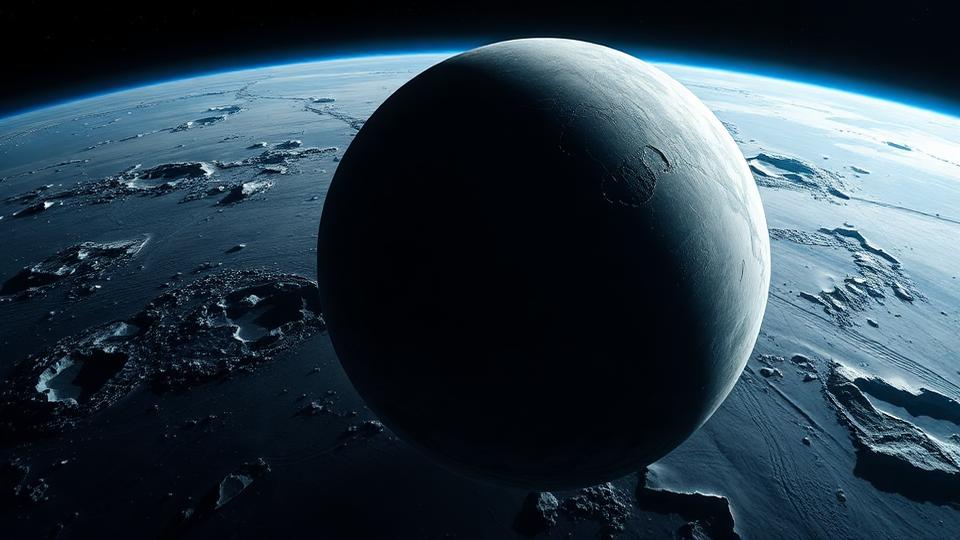
Is Pluto a Planet?
For 76 years Pluto was the ninth planet — until a controversial 2006 vote changed everything.
Quick Answer
No. Since August 24, 2006, Pluto has been classified as a 'dwarf planet' by the International Astronomical Union (IAU). It was reclassified because it has not cleared the neighborhood around its orbit.
Pluto was discovered on February 18, 1930, by Clyde Tombaugh at the Lowell Observatory in Arizona. For decades, it was taught as the ninth planet in our solar system. But as telescopes improved and astronomers discovered more objects in the Kuiper Belt, Pluto's planetary status came under scrutiny.
In 2005, the discovery of Eris — a trans-Neptunian object more massive than Pluto — forced the astronomical community to formally define what a planet is. The IAU established three criteria: a planet must orbit the Sun, have enough mass for a roughly spherical shape, and have 'cleared the neighborhood' around its orbit. Pluto meets the first two but fails the third.
The Kuiper Belt, where Pluto resides, is filled with thousands of icy objects. Unlike the eight planets, Pluto shares its orbital neighborhood with these objects and has not gravitationally dominated its region. This is the key reason for its reclassification as a dwarf planet.
NASA's New Horizons spacecraft flew past Pluto in July 2015, revealing a surprisingly complex world with mountains of ice, a thin atmosphere, and a heart-shaped nitrogen glacier. Despite its demotion, Pluto remains one of the most fascinating objects in our solar system and continues to captivate scientists and the public alike.
Key Fact
Pluto was reclassified from a planet to a 'dwarf planet' by the International Astronomical Union in 2006, after 76 years as the ninth planet in our solar system.
Why It Matters
Pluto's reclassification matters because it fundamentally changed how we categorize and understand our solar system. The decision sparked a global debate about what defines a planet and highlighted how science evolves as new discoveries are made. It also led to the recognition of a whole new class of celestial bodies — dwarf planets — including Eris, Haumea, Makemake, and Ceres. The controversy made astronomy more accessible and interesting to the public, and the New Horizons mission showed that even 'demoted' worlds can be scientifically extraordinary.
Did You Know?
- •Pluto's largest moon, Charon, is so big relative to Pluto that the two actually orbit a point in space between them — making them almost a 'double dwarf planet' system.
- •It takes sunlight over 5 hours to reach Pluto, compared to just 8 minutes to reach Earth.
- •Pluto's surface temperature drops to about -230°C (-382°F), making it one of the coldest known objects in the solar system.
- •The heart-shaped feature on Pluto's surface, nicknamed 'Tombaugh Regio,' is a glacier of frozen nitrogen larger than the state of Texas.
- •Pluto takes 248 Earth years to complete one orbit around the Sun — meaning it hasn't even completed one full orbit since its discovery in 1930.
How to Explain Pluto's Reclassification
Understanding the three criteria that define a planet according to the IAU.
- 1
List the three criteria
A planet must: (1) orbit the sun, (2) have enough mass to be roughly spherical, and (3) have cleared its orbital neighborhood of other debris.
- 2
Explain where Pluto fails
Pluto meets criteria 1 and 2, but its orbit overlaps with thousands of other Kuiper Belt objects — it hasn't 'cleared' its neighborhood.
- 3
Define dwarf planet
In 2006, the IAU created the 'dwarf planet' category for objects like Pluto that meet only the first two criteria.
Key Dates
1930
Clyde Tombaugh discovers Pluto at Lowell Observatory, Arizona.
1978
Pluto's largest moon, Charon, is discovered.
2005
Eris is discovered, triggering the planetary definition debate.
2006
The IAU votes to reclassify Pluto as a dwarf planet.
2015
NASA's New Horizons performs first flyby of Pluto.
Related Facts
Frequently Asked Questions
Explore More
Explore more fascinating facts about space, planets, and the cosmos.
Explore SnapFacts