⚡ Quick Answer
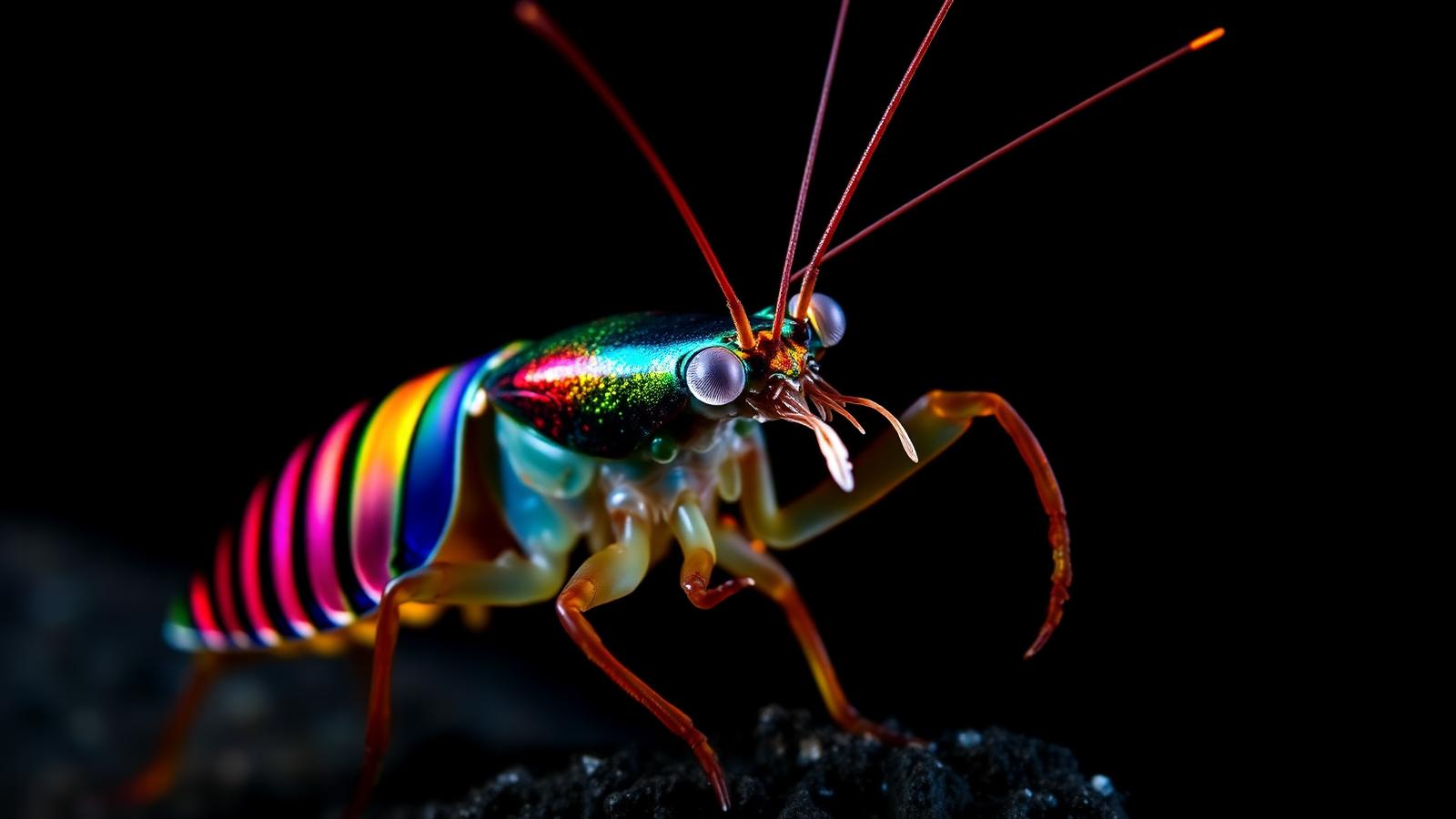
The world is full of documented oddities: one jellyfish species (Turritopsis dohrnii) is biologically immortal, mantis shrimp have 16 color receptors and see polarized light, sharks are older than trees, and about 60% of your DNA matches a banana's. Weirdness, it turns out, is the default setting of the universe.
Featured Facts
Weirdness by the Numbers
Some 'weird' facts feel more surreal when you compare them side by side. Below is a snapshot of six documented oddities across biology, geology, and physics — each one measured, published, and repeatable. The bar chart underneath shows how far each fact deviates from what you'd probably guess (the 'gap' bar is calibrated 0–100, where 100 means 'almost nobody guesses this close').
| Fact | Value | Source domain |
|---|---|---|
| Mantis shrimp photoreceptors | 16 types | Marine biology |
| Turritopsis dohrnii lifespan | Biologically immortal | Cnidarian research |
| Sharks predate trees | ~400 million years | Paleontology |
| Human/banana DNA overlap | ~60% shared genes | Genomics |
| Wombat feces shape | Cube-shaped | Zoology |
| Day length on Venus | 243 Earth days | Planetary science |
Estimated from informal reader polls — illustrative, not survey-grade.
What Makes a Fact 'Weird'?
A fact feels weird when it collides with an assumption you didn't know you had. We assume hearts come in singles, that lightning is hot but not that hot, that day is shorter than a year, and that anything old must have spoiled. Every fact on this page breaks one of those quiet assumptions — and every one is documented in peer-reviewed research, museum records, or measurements you can look up yourself.
That's the rule for this hub: strange, but real. We don't publish 'weird facts' that are urban legends dressed up as trivia. If a claim can't be traced to a reputable source, it doesn't make the list. What's left is what science, history, and biology have actually delivered — which turns out to be plenty weird on its own.
Weird Animal Facts
Animals are where reality gets truly strange. Evolution has produced creatures with 16-channel eyesight, transparent skin, immortal cells, and self-amputating limbs — all of it standard biology, none of it fiction.
The weirdest animal facts often reveal how narrow our idea of 'normal life' really is. Every strange trait below evolved because it works — for the animal that has it. Cube-shaped poop helps wombats mark territory without it rolling away. Sixteen photoreceptors let the mantis shrimp classify colors and polarization at speeds our vision can't match. Immortality, in the case of Turritopsis dohrnii, is really just a very stubborn refusal to grow up.
- •The mantis shrimp has 16 photoreceptor types and sees polarized light
- •Sharks are older than trees — they've existed for 400+ million years
- •The blue whale is the largest animal that ever lived, bigger than any dinosaur
- •A group of flamingos is called a 'flamboyance'
- •Wombat poop is cube-shaped — the only known cubic feces in nature
- •Turritopsis dohrnii is biologically immortal — it resets to its juvenile stage instead of aging
Weird Human Body Facts
Your body is a walking collection of oddities. It replaces most of its cells every few years, generates enough electricity to run a small LED, and shares more DNA with a banana than most people would guess. About 90% of the cells inside you aren't even human — they're bacteria, fungi, and other microbes that outnumber your own cells and quietly keep you alive.
The strangest body facts come from scale. Stretched end to end, the blood vessels in one adult would wrap Earth's equator more than twice. Your small intestine is longer than a giraffe is tall. And your stomach lining rebuilds itself every few days for a very good reason: the acid inside would otherwise start digesting the organ that made it.
- •Humans share about 60% of their DNA with bananas
- •The human brain has ~86 billion neurons and generates 20 watts of power
- •You have more than half of your bones in your hands and feet alone
- •Your stomach lining replaces itself every 3–4 days to avoid digesting itself
- •The average person walks the equivalent of 5 times around Earth in a lifetime
Weird Science & Nature Facts
Nature keeps producing things that sound made up. Lightning is hotter than the surface of the Sun, mantis shrimp punch with the force of a bullet, and there is a lake in Africa so alkaline it turns animals into statues. The reasons behind these facts are usually more interesting than the facts themselves — a mantis shrimp accelerates its club faster than water can flow around it, briefly boiling the seawater in front of it.
Physics runs the same trick at planetary scale. There is enough gold locked in Earth's core to coat the entire planet in a 45-centimeter layer, but no way to reach it. Bananas set off some radiation detectors thanks to potassium-40, but you would need to eat about ten million of them at once to feel any effect. Weird facts often live at that intersection: technically true, but the number that follows changes everything.
- •One jellyfish species can reset its life cycle indefinitely
- •Lightning is about 5× hotter than the surface of the Sun
- •The Northern Lights are caused by charged solar particles hitting the atmosphere
- •Bananas are radioactive (thanks to potassium-40) — but harmlessly so
- •There's enough gold in Earth's core to coat the whole planet in a 45 cm layer
Weird Space & Universe Facts
Space is where 'weird' becomes an understatement. Planets rain diamonds, one day on Venus is longer than its year, and there is a cloud of alcohol 1,000 times larger than our solar system drifting through the Milky Way. If our solar system were shrunk so Earth was the size of a pea, the nearest star would still be more than 4,000 kilometers away.
The oddest space facts come from time. Light from the Sun takes about 8 minutes and 20 seconds to reach us, so a sunset is always a memory. Light from the Andromeda galaxy left home about 2.5 million years ago — before Homo sapiens existed. Every time you look up, you're looking backwards in time by a distance nothing in physics can shrink.
- •Venus is the hottest planet — hotter than Mercury despite being farther from the Sun
- •A day on Venus (243 Earth days) is longer than its year (225 Earth days)
- •There's a giant cloud of water vapor in space holding 140 trillion times Earth's oceans
- •It rains diamonds on Neptune and Uranus, according to lab simulations
- •Light from the Sun takes 8 minutes and 20 seconds to reach Earth
How We Verify Weird Facts
Weird facts are the most fun to share and the most likely to be wrong. That's because a fact only spreads widely if it feels surprising, and 'surprising' is often just another word for 'not quite right.' Every entry on this hub is written from a public reference — a published paper, an official measurement, or an institution like NASA or the Smithsonian — and we name the source in the text whenever a number is contested.
When we find a weird claim that turns out to be a myth, we remove it or write a fact page explaining what's actually true. The '10% of the brain' idea is a good example: brain scans show every region does something, so we won't list it as a fact. Weird only counts if it survives the source check.
Frequently Asked Questions
Explore More Fact Collections
Fun Facts for Kids
Kid-friendly amazing facts about animals, space, and the body.
Cool Facts
Awesome mind-blowing facts that make great conversation starters.
Fun Fact of the Day
A fresh set of 10 hand-picked facts every day at 12:00 UTC.
Explore All Facts
Browse 6,500+ curated facts across 14 categories.
Explore thousands more strange, surprising, and 100% curated facts.
Explore All Facts