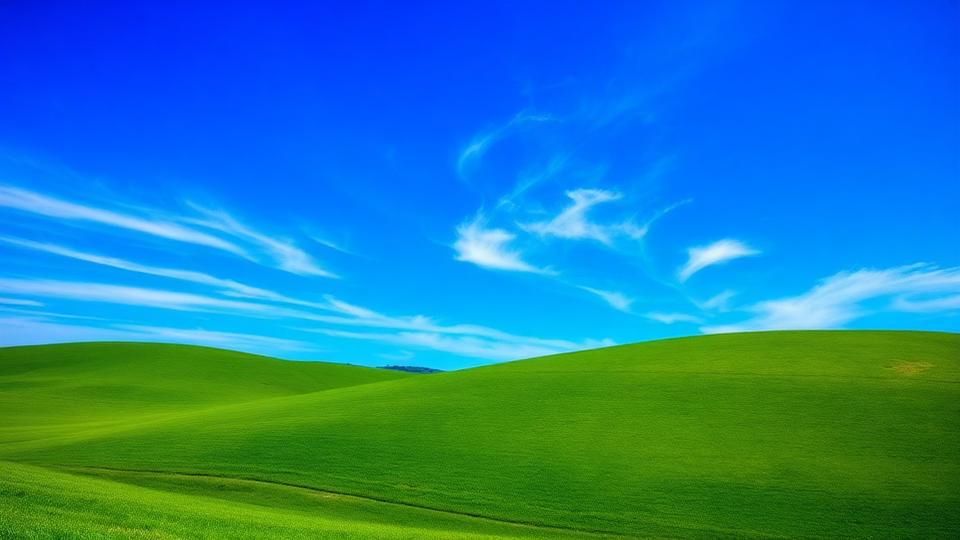
Why Is the Sky Blue?
It's one of the first questions children ask — and the answer involves physics, sunlight, and the invisible gases surrounding our planet.
Quick Answer
The sky appears blue because molecules in Earth's atmosphere scatter shorter-wavelength blue light from the sun more than other colors, a phenomenon known as Rayleigh scattering.
Sunlight may look white, but it actually contains all the colors of the visible spectrum — red, orange, yellow, green, blue, and violet. When sunlight enters Earth's atmosphere, it collides with gas molecules like nitrogen and oxygen.
These tiny molecules scatter shorter wavelengths of light (blue and violet) much more efficiently than longer wavelengths (red and orange). This process is called Rayleigh scattering, named after the British physicist Lord Rayleigh who first described it in the 1870s.
You might wonder: if violet light has an even shorter wavelength than blue, why doesn't the sky look violet? There are two reasons. First, the sun emits more blue light than violet. Second, our eyes are more sensitive to blue light than violet, so we perceive the scattered light as blue.
At sunrise and sunset, sunlight travels through a much thicker layer of atmosphere to reach your eyes. This extra distance scatters away most of the blue light, allowing the longer-wavelength reds and oranges to dominate — which is why sunsets appear red and orange.
Key Fact
The sky's blue color is caused by Rayleigh scattering — sunlight bouncing off nitrogen and oxygen molecules in the atmosphere, which scatter blue wavelengths about 10 times more than red wavelengths.
Why It Matters
Understanding why the sky is blue was a breakthrough in physics that helped scientists understand how light interacts with matter at the molecular level. Rayleigh scattering principles are now used in fiber optics, climate science, remote sensing, and even medical imaging. The same physics that makes our sky blue helps engineers design better communication networks and helps climate scientists monitor atmospheric pollution from space.
Did You Know?
- •On Mars, the sky appears butterscotch-pink during the day and blue at sunset — the exact opposite of Earth.
- •The sky on the Moon appears completely black, even during the day, because there is no atmosphere to scatter light.
- •At high altitudes, the sky appears darker blue because there are fewer molecules to scatter light.
- •The blue color of the ocean is partly caused by the same Rayleigh scattering principle, plus absorption of red wavelengths by water.
How to Explain Why the Sky Is Blue
A simple step-by-step guide to understanding and explaining Rayleigh scattering.
- 1
Start with sunlight
Explain that sunlight contains all colors of the visible spectrum — red, orange, yellow, green, blue, and violet.
- 2
Introduce the atmosphere
Describe how Earth's atmosphere is filled with tiny nitrogen and oxygen molecules that interact with incoming light.
- 3
Explain scattering
Shorter wavelengths (blue and violet) scatter much more than longer wavelengths (red and orange) when they collide with air molecules — this is Rayleigh scattering.
- 4
Address the violet question
Clarify that although violet scatters even more, our eyes are more sensitive to blue, and the sun emits more blue than violet light.
Key Dates
1859
John Tyndall first demonstrated that light scattering by small particles could produce blue light
1871
Lord Rayleigh published the mathematical explanation for why the sky is blue
1899
Rayleigh confirmed that atmospheric gas molecules (not dust) cause the blue sky
1910
Albert Einstein provided a more complete derivation of the scattering formula
Related Facts
- •The speed of light is 299,792,458 meters per second
- •Venus is the hottest planet despite being farther from the sun than Mercury
- •The sun is actually white — it only appears yellow due to atmospheric scattering
- •Rainbows form when sunlight refracts through water droplets, splitting into its component colors
Frequently Asked Questions
Explore More
Fascinated by the science of light and color? Explore more amazing facts.
Explore SnapFacts