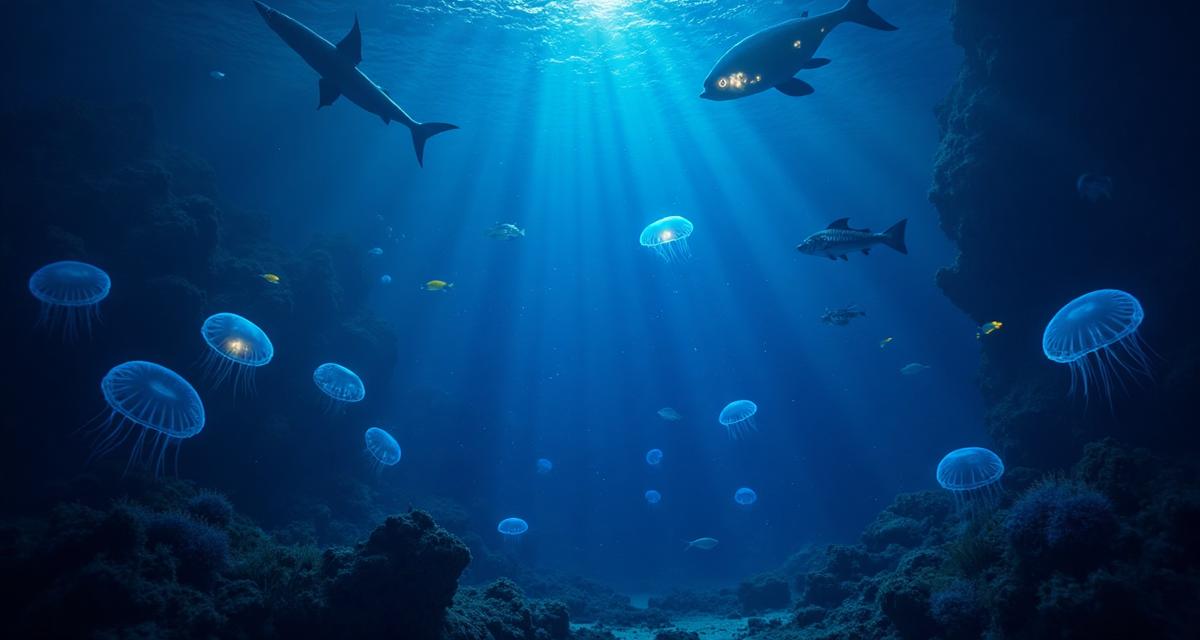
More than 80% of the ocean remains unexplored, unmapped, and unobserved. The deep ocean—defined as anything below 200 metres—is a world of crushing pressure, perpetual darkness, and extreme cold. Yet life thrives there in ways that challenge everything we thought we knew about biology.
The Twilight Zone and Beyond
The ocean is divided into distinct zones based on depth and light penetration. Below the sunlit surface layer lies the "twilight zone" (200-1,000 metres), where only faint blue light penetrates. Deeper still is the midnight zone (1,000-4,000 metres) of complete darkness, and the abyssal zone (4,000-6,000 metres) where pressures exceed 400 times that at sea level.
The deepest point on Earth, the Challenger Deep in the Mariana Trench, plunges 10,994 metres below the surface. The pressure there is so extreme that if you placed a styrofoam cup at that depth, it would compress to the size of a thimble. Yet life exists even here—specialized shrimp-like amphipods and bacterial mats thrive in this crushing environment.
Living Light: The Magic of Bioluminescence
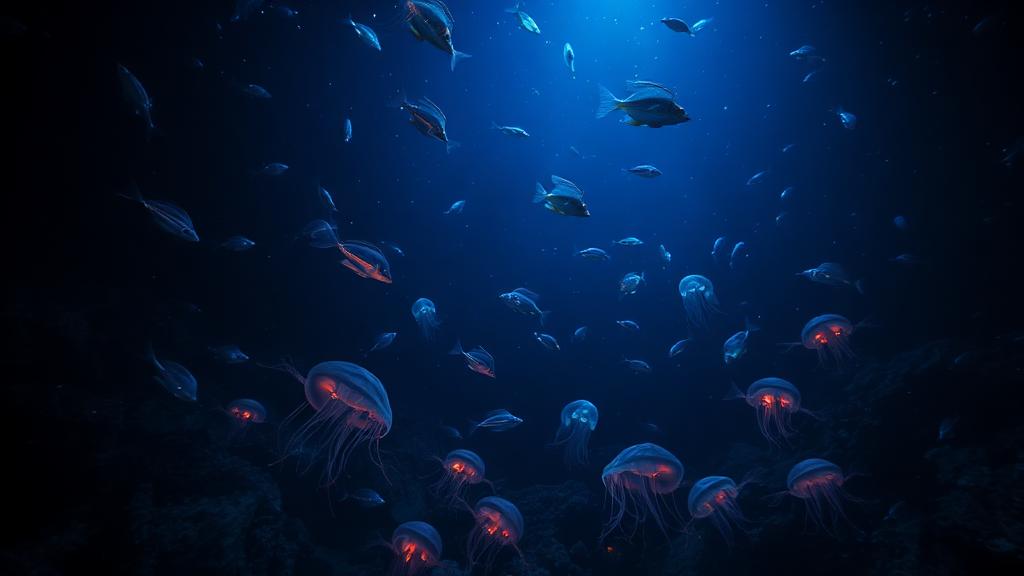
In the deep ocean, an estimated 90% of creatures produce their own light through bioluminescence. This isn't a rare adaptation—it's the norm in a world without sunlight. Animals use these living lights to hunt, attract mates, communicate, and evade predators.
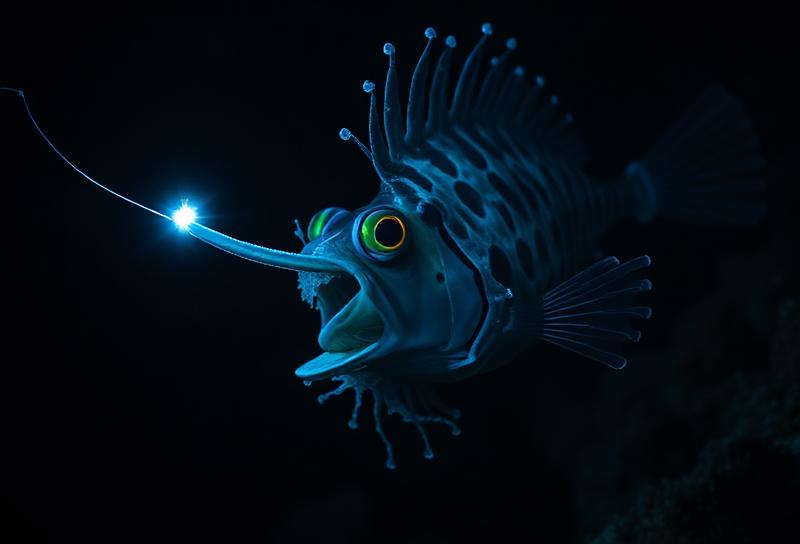
The anglerfish is perhaps the most famous example, dangling a glowing lure to attract prey to its enormous jaws. But bioluminescence takes many forms: firefly squid that flash like disco lights, dragonfish with red searchlights invisible to most deep-sea eyes, and vampire squid that release glowing clouds to confuse attackers.
Hydrothermal Vents: Oases in the Abyss
Perhaps the most revolutionary discovery in ocean exploration came in 1977 when scientists found hydrothermal vents—underwater geysers spewing mineral-rich water heated to over 400°C by volcanic activity. Surrounding these vents were thriving ecosystems that defied our understanding of life.
These communities run on chemosynthesis, not photosynthesis. Bacteria convert the toxic hydrogen sulphide from the vents into energy, forming the base of a food chain that includes giant tube worms up to 2 metres long, ghostly white crabs, and bizarre fish. These ecosystems proved that life can thrive without sunlight—a discovery with profound implications for the search for life on other planets.
Giants and Oddities of the Deep
The deep ocean is home to some of nature's most bizarre creatures. The giant squid, once thought mythical, can reach 13 metres in length and has the largest eyes in the animal kingdom—the size of dinner plates. The oarfish, which can grow over 11 metres long, may be responsible for ancient sea serpent legends.
Deep-sea gigantism is a real phenomenon. Isopods—relatives of woodlice—grow to the size of footballs in the deep. Amphipods in the Mariana Trench reach sizes 45 times larger than their shallow-water cousins. Scientists believe the cold temperatures, high pressure, and scarce food may favour larger body sizes for energy efficiency.
Why the Deep Ocean Matters
The deep ocean isn't just a curiosity—it's essential to life on Earth. It absorbs vast amounts of carbon dioxide, helping regulate our climate. Deep-sea bacteria are being studied for new antibiotics and cancer treatments. The minerals on the ocean floor may hold the key to future technologies.
Yet we know more about the surface of Mars than we do about the ocean floor. As technology advances, we're finally beginning to explore this alien world within our own planet. What we discover there continues to reshape our understanding of life itself—and where else in the universe it might exist.