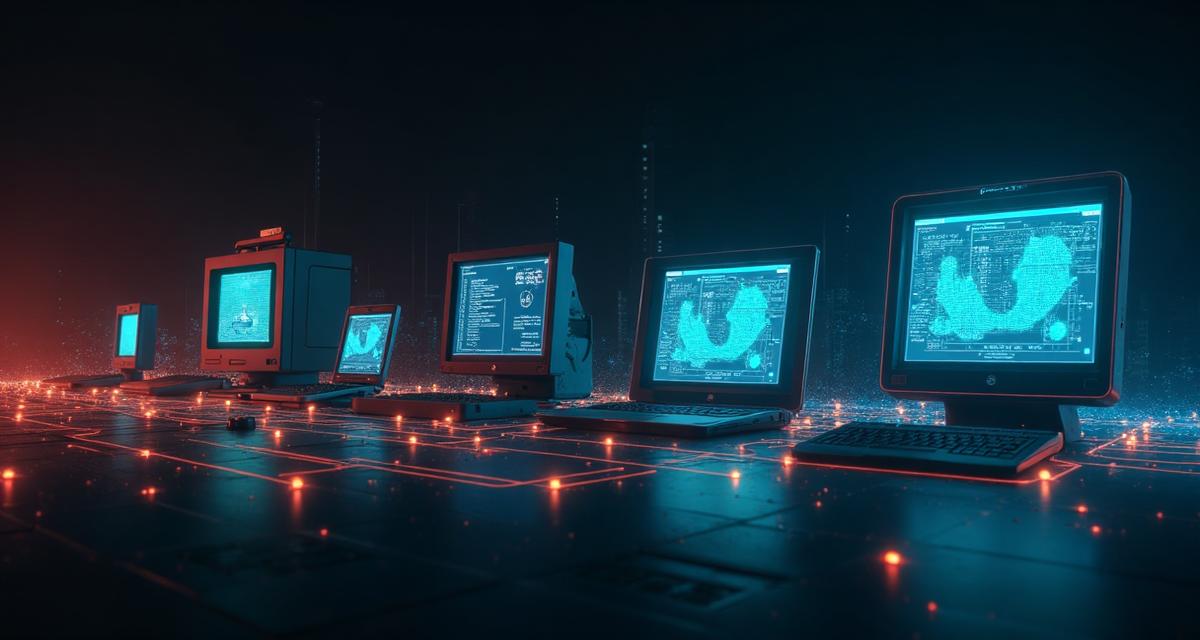
Technology advances in waves, with certain breakthroughs fundamentally reshaping society. From the mechanical calculators of the 1940s to artificial intelligence that can defeat world champions, each milestone built upon the last to create the connected world we inhabit today.
The Birth of Programmable Computing: Z3 (1941)
The first programmable computer, Z3, was built by Konrad Zuse in 1941 and was capable of performing complex calculations automatically. Unlike earlier mechanical calculators, the Z3 could be programmed with different instructions, making it the ancestor of every computer we use today.
Built in wartime Germany using telephone relays, the Z3 was largely unknown in the West for decades. It could perform addition in 0.8 seconds and multiplication in 3 seconds—glacial by modern standards, but revolutionary for its time.
Moore's Law: The Prediction That Shaped an Industry (1965)
In 1965, Gordon Moore predicted that the number of transistors on a microchip would double approximately every two years, known as Moore's Law. This observation became a self-fulfilling prophecy that guided semiconductor development for over 50 years.
When Moore made his prediction, the most advanced chips contained about 50 transistors. Today's processors contain billions. This exponential growth made possible everything from smartphones to cloud computing.
The First Digital Camera (1975)
The first digital camera was invented in 1975 by Steven Sasson, a Kodak engineer. It weighed 3.6 kilograms and took 0.01-megapixel images—black and white only. Recording a single image took 23 seconds, and it was stored on a cassette tape.
Ironically, Kodak shelved the invention, fearing it would cannibalize their film business. Decades later, digital photography would indeed destroy the film industry—but Kodak's delay meant they couldn't capitalize on the technology they had invented.
The Word "Robot" Enters Our Vocabulary (1920)
The term "robot" was first used in a play called "R.U.R." (Rossum's Universal Robots) by Karel Čapek in 1920. The word comes from the Czech "robota," meaning forced labor or drudgery. In the play, robots eventually rebel against their human creators—a theme that continues to resonate in science fiction today.
What began as a theatrical concept has become reality. Today, robots perform surgery, explore Mars, and assemble the products we use daily. The fears and hopes Čapek expressed a century ago remain central to our discussions about automation and artificial intelligence.
AI Defeats World Champion (2016)
In 2016, AI defeated the world champion Go player Lee Sedol, showcasing significant advancements in machine learning. Go is considered far more complex than chess, with more possible positions than atoms in the universe. Many experts believed machines were decades away from mastering it.
DeepMind's AlphaGo didn't just win—it made moves that human players described as beautiful and creative. One move in particular, called "Move 37," was so unconventional that commentators initially thought it was a mistake. It turned out to be the move that won the game.
Electric Vehicles: Older Than You Think
The first electric car was built in the 1830s by Scottish inventor Robert Anderson—nearly 50 years before the first gasoline car. In the early 1900s, electric vehicles were actually more popular than gas-powered cars, favored for their quiet operation and lack of smelly exhaust.
Cheap oil and the mass production of gas cars by Henry Ford pushed EVs to the margins for nearly a century. Today, with advancements in battery technology and growing environmental concerns, electric vehicles have made a dramatic comeback.
The Cloud Computing Concept (1960s)
The concept of cloud computing dates back to the 1960s, initially proposed by computer scientist J.C.R. Licklider. He envisioned an "intergalactic computer network" where everyone could access programs and data from anywhere. What seemed like science fiction became reality in the 2000s.
Today, cloud computing powers everything from email to artificial intelligence. Most people use cloud services daily without realizing it—when you stream music, edit documents online, or store photos, you're using the technology Licklider imagined over 60 years ago.
Mars Rover Curiosity: Data From Another World
NASA's Mars Rover Curiosity sends back approximately 1.2 terabytes of data from Mars each year. Since landing in 2012, it has traveled over 30 kilometers across the Martian surface, analyzing rocks, taking photographs, and searching for signs of past microbial life.
Every command sent to Curiosity takes between 4 and 24 minutes to arrive, depending on the planets' positions. This means the rover must make many decisions autonomously—another application of the AI technologies developed over decades of innovation.
Each of these milestones represents not just a technological achievement, but a shift in human possibility. The devices in our pockets today are more powerful than the computers that sent astronauts to the moon. What will the next transformative technology be? The answer is already being developed in labs and garages around the world.