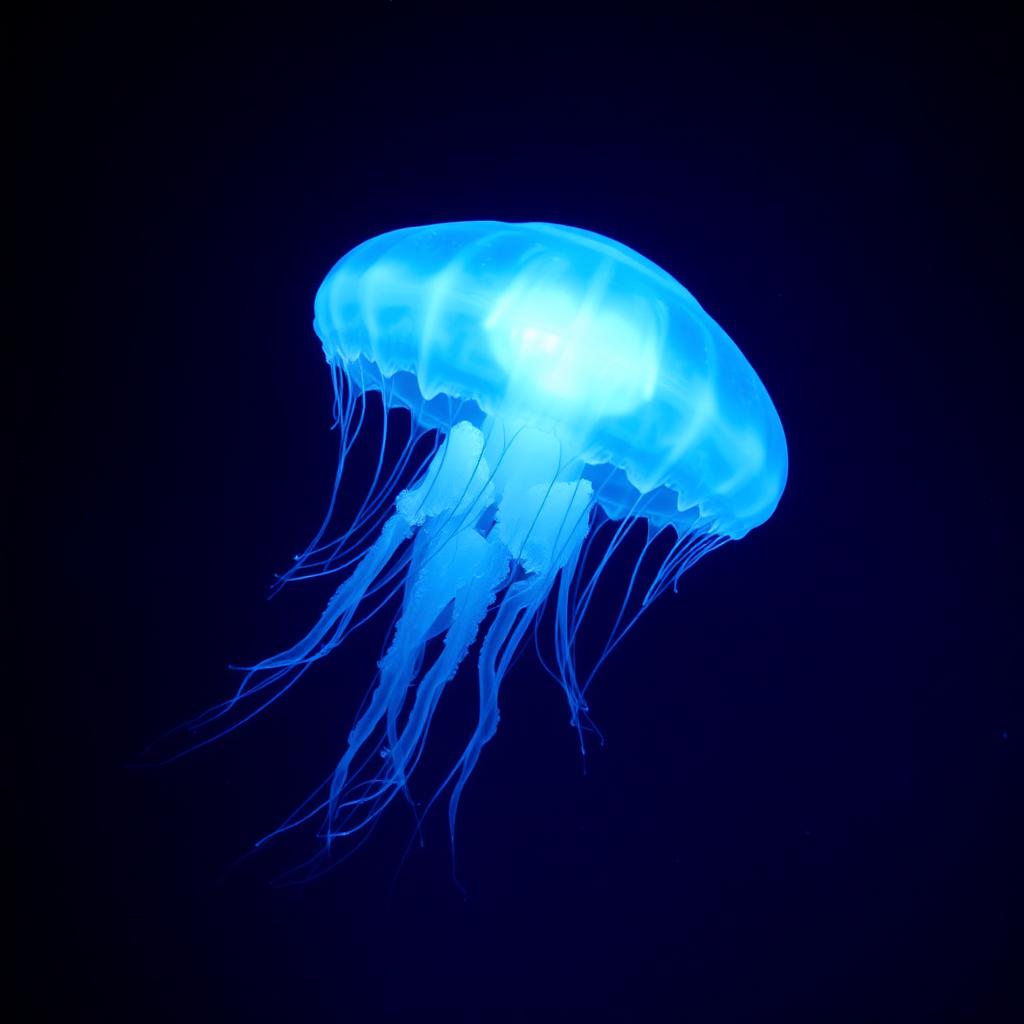
The Immortal Jellyfish: An Animal That Restarts Its Life
Turritopsis dohrnii is a tiny, translucent jellyfish that responds to stress, injury, or old age by reverting to its juvenile polyp form — effectively resetting its life and starting over from the beginning.
Quick Answer
The 'immortal jellyfish', Turritopsis dohrnii, can reverse its life cycle through a process called transdifferentiation. When threatened or aged, its adult cells transform back into younger cell types, and the entire animal collapses into a polyp — the juvenile stage. It is the only known animal biologically capable of this.
Most animals follow a strict one-way life cycle: born, grow, reproduce, age, die. Turritopsis dohrnii, a jellyfish measuring only about 4.5 mm across, does not. When it is starving, injured, or environmentally stressed, its bell-shaped medusa body sinks to the sea floor and its cells transform back into a colonial polyp — the earliest post-embryonic stage of its life. From that polyp, new medusae bud off, genetically identical to the original.
The mechanism is called transdifferentiation. Cells that had already specialized as, for example, muscle cells, are able to switch identity and become nerve cells, egg cells, or something else entirely. In humans this only happens under strict, limited conditions like liver regeneration. In Turritopsis dohrnii it is a whole-body response, effectively rebooting the animal's development.
This does not mean the individual jellyfish is invincible. Immortal is a biological term, not a practical one — the animal is still easily eaten by predators or killed by disease. But barring accidents, there is no biological ceiling on its lifespan. In principle, a single genetic line can persist indefinitely by cycling between polyp and medusa forms.
Turritopsis dohrnii was originally described in the Mediterranean but has spread worldwide, most likely by hitchhiking in the ballast water of cargo ships. That makes it one of the very few invasive species that carries its own reset button — a survival strategy that seems tailor-made for stressful, unfamiliar environments.
Key Fact
Turritopsis dohrnii can revert from an adult medusa back into a juvenile polyp through transdifferentiation, making it the only known biologically immortal animal.
Why It Matters
Immortal-jellyfish research is one of the most closely watched fields in cell biology and gerontology. Understanding how a fully differentiated cell can safely revert to a stem-cell-like state could reshape regenerative medicine — from repairing spinal cord damage to reversing degenerative diseases. It also challenges the assumption that aging is universal or inevitable. If a single lineage of jellyfish can persist indefinitely, aging may be less of a physical law and more of an evolutionary strategy.
Did You Know?
- •Turritopsis dohrnii adults are smaller than a fingernail and nearly transparent — most are only spotted under a microscope.
- •Japanese scientist Shin Kubota has spent decades keeping a colony in his lab, observing them repeatedly reset their life cycle.
- •The species has spread across almost every ocean, likely as an invasive stowaway on shipping routes.
- •Cancer cells share some biological tricks with Turritopsis dohrnii — both involve cells refusing to age normally. Studying jellyfish transdifferentiation may improve cancer research.
- •The animal cannot escape predators, disease, or being eaten — 'immortal' here refers to biological aging, not physical invulnerability.
How the Immortal Jellyfish Resets Its Life
The four-step biological reset cycle of Turritopsis dohrnii.
- 1
Encounter stress
When starved, injured, or environmentally stressed, the adult medusa begins to break down instead of dying.
- 2
Trigger transdifferentiation
Specialized adult cells revert to earlier developmental cell types, changing identity without a stem-cell intermediate.
- 3
Collapse into a polyp
The whole body settles onto a surface and reforms as a colonial polyp — the juvenile stage of the jellyfish life cycle.
- 4
Bud new medusae
The polyp buds off new, young medusae that are genetically identical to the original, restarting the cycle.
Related Facts
Frequently Asked Questions
Explore More
Explore more fascinating facts about biology, aging, and marine life.
Explore SnapFacts